Projects
Resume
About Me
Graduate Capstone solo project for Master's degree at Purdue University
Project Duration: 1 semester (4 months)
Role: User research, affordance analysis, user interviews, thematic analysis, cultural probe, sketching, wireframing
Tools Used: Figma, Miro, Dovetail, digital probing, paper prototyping
Understanding The Scope
“How did sending short-form videos become a regular part of our online interactions with our friends? How does this influence our expectations about online correspondences?”
Research for Design attempt at establishing the use of short-form videos (such
as TikToks and Instagram Reels) as an emerging tool for communication as well as identifying the
affordances of different social media that enable such communication
Using the
insights, find opportunities for improved communication and provide recommendations that social
media companies can use to improve the affordances that make such communication
possible
*The key
focus group is younger millennials and Gen-Z but these patterns may be seen in older adults as
well
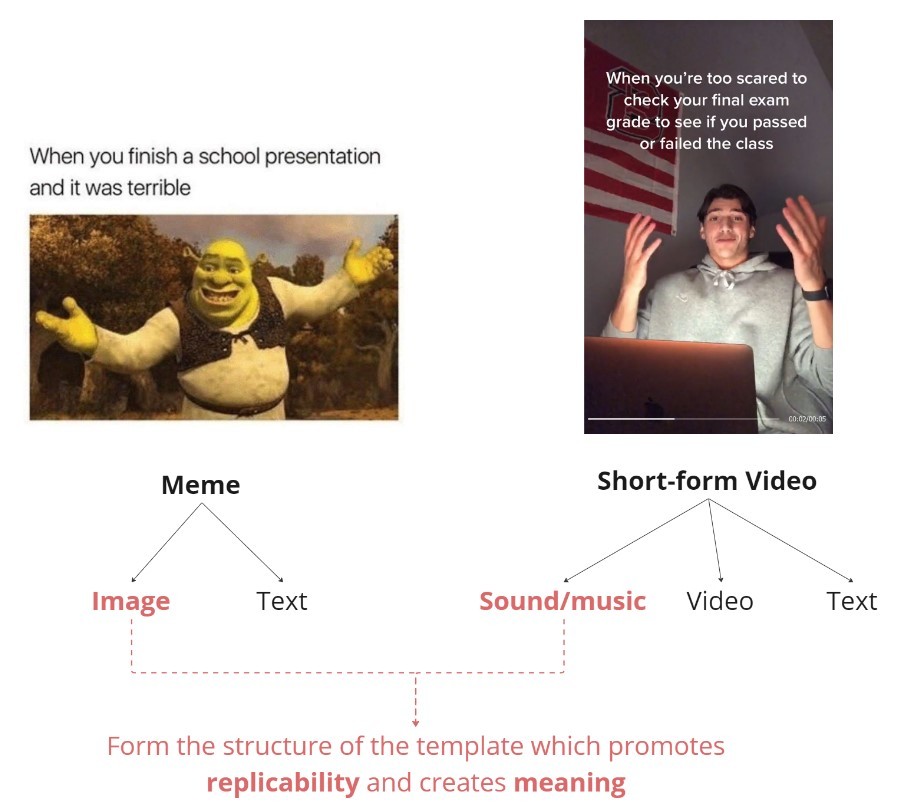
Short Form Videos as Memes
Memes are content that is replicable and easily shared online. Videos such as TikToks and reels are an emergent form of memes with a more complex structure. Video ‘trends’ are basically the same as memes. The sound becomes the meme and is dispersed online in different videos following the same template. The richer multimedia adds more contextual and affective meaning to short-form videos
Research Process
Literature Review
What are
Paralinguistic Digital Affordances (PDAs) such as likes and reacts, and how can I relate them to
online communication using short-form media?
What
are the affective affordances of PDAs?
How do people express care and
support through PDA?

Shared Media Affordances
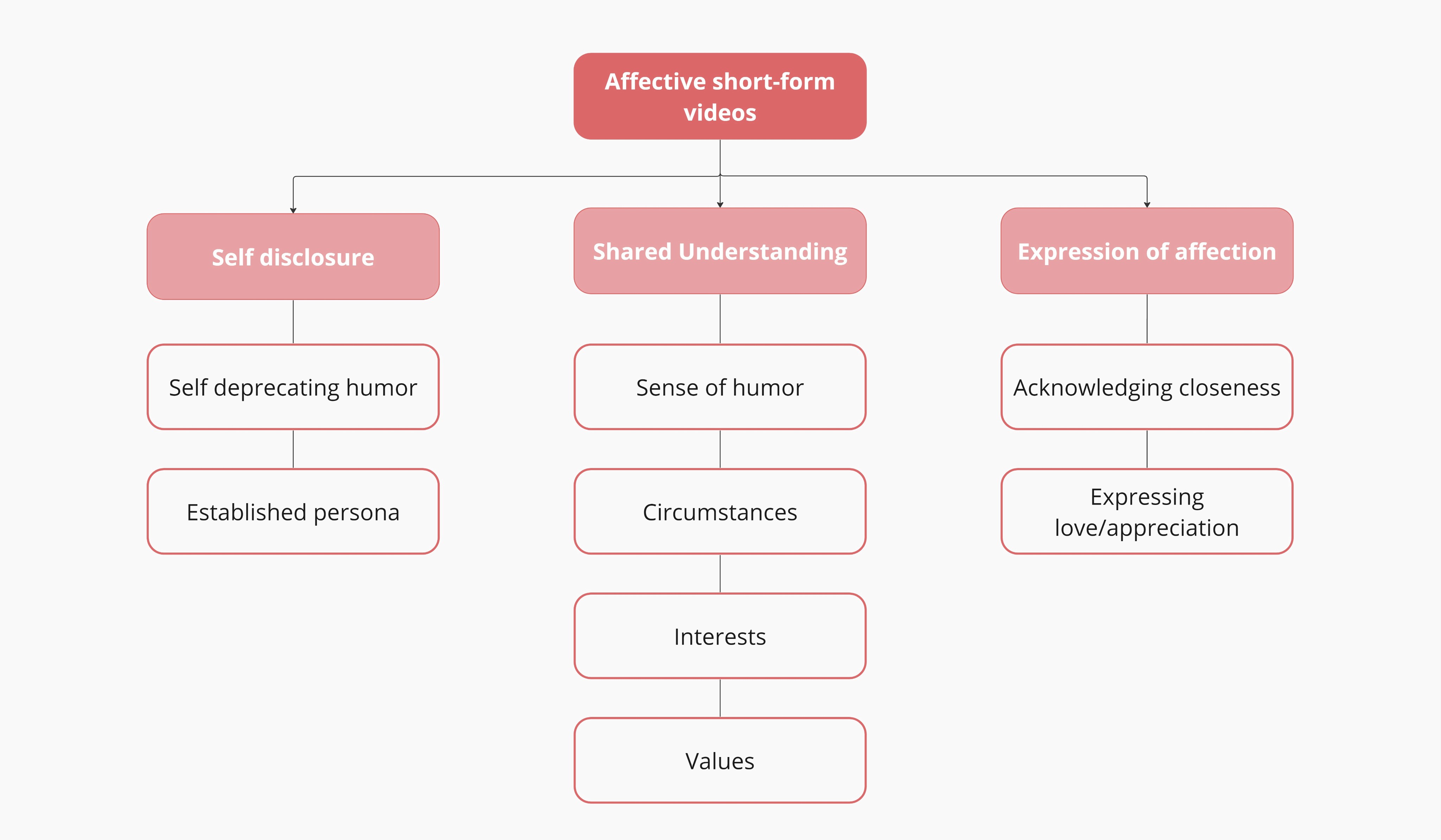
Based on the insights gathered both from my perusal of short-form videos and their affective affordances as well as the findings from the interviews and probe, some of the key categories of content have been sorted based on their emotional effects on the recipient.


Interviews
9 interviews
What kind of content do people share during
specific, emotional situations?
Do people use
short-form content as a way to bridge the gap of emotional communication?
How are people using this content as padding for their conversations?
How do people find relevant content to send to
others?
Probe Messaging Activity
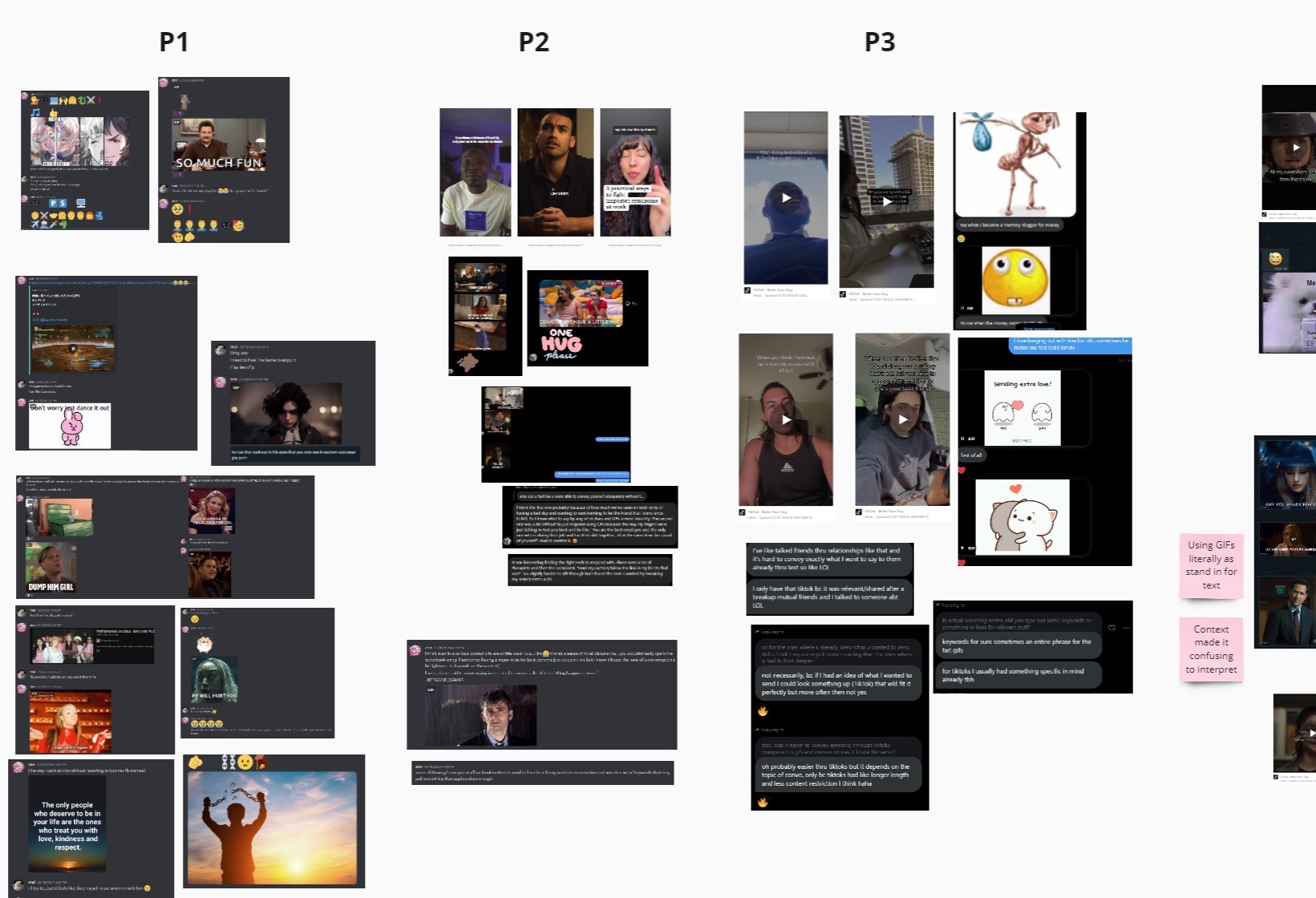
Participants were asked to respond to the scenarios provided to them by messaging me while I roleplayed as their close friend. Restricted to communicating without using any form of text messaging. They were free to use any other media, including GIFs, stickers, reels, TikToks etc.
Each participant was given two scenarios to act out a less emotional, more
communicative scenario and a highly emotional, complex scenario
Preliminary Research Insights
Short videos are used as a tool by people to express their values and emotions without having to use words to do so
Sharing memes with people of similar values creates an intimate relationship between them and perceived understanding
Relational closeness allows one person to better interpret the meaning behind sending a certain meme or online media to the other
People develop their own norms for how they choose to communicate with each other and what certain actions mean to them
People are more likely to maintain communication if they receive positive feedback and reinforcement from others
When seeking support, it is important to receive more ‘high quality’ responses such as verbal support and a display of greater intimacy
Major Insights from Thematic Analysis
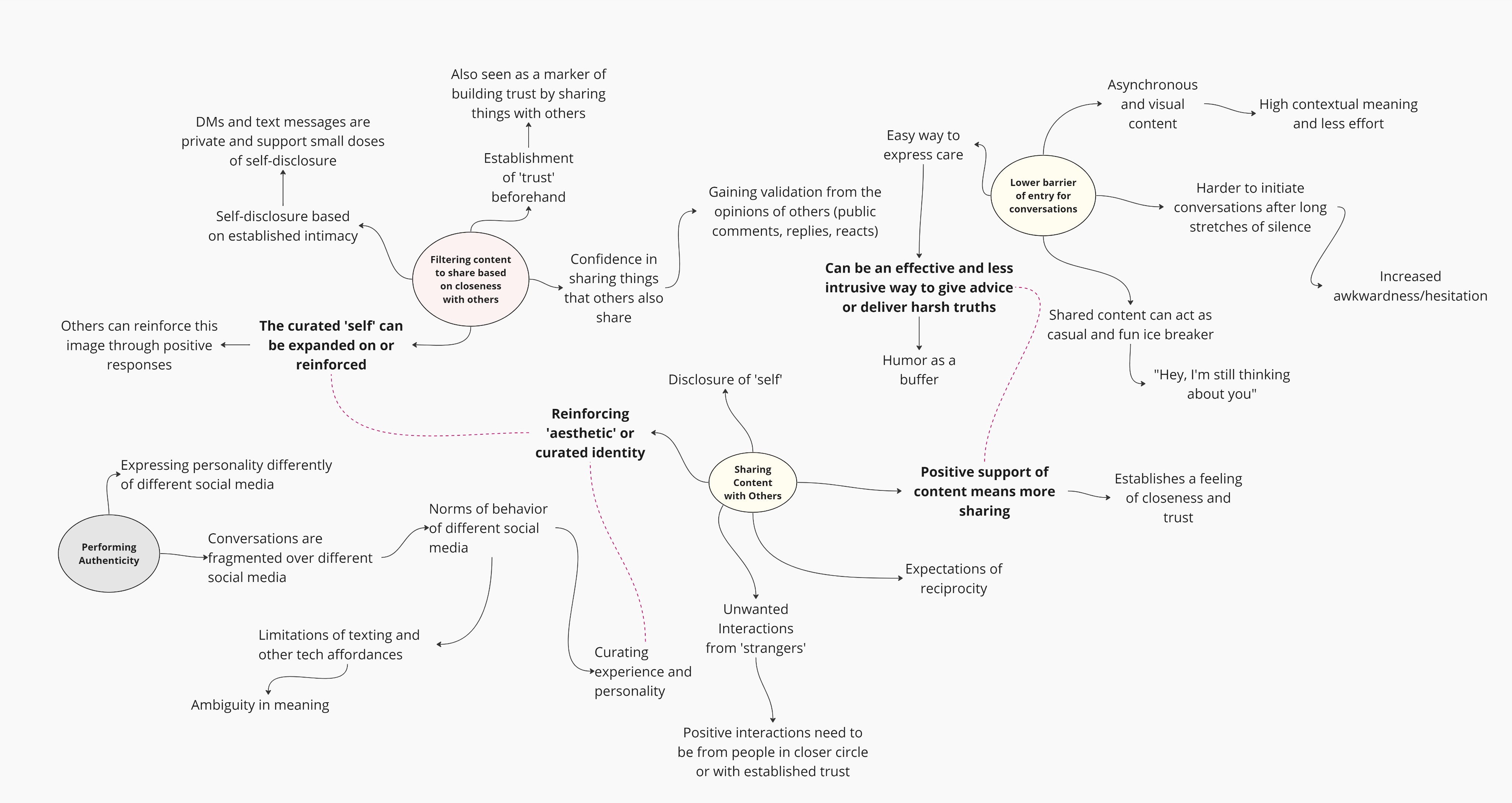
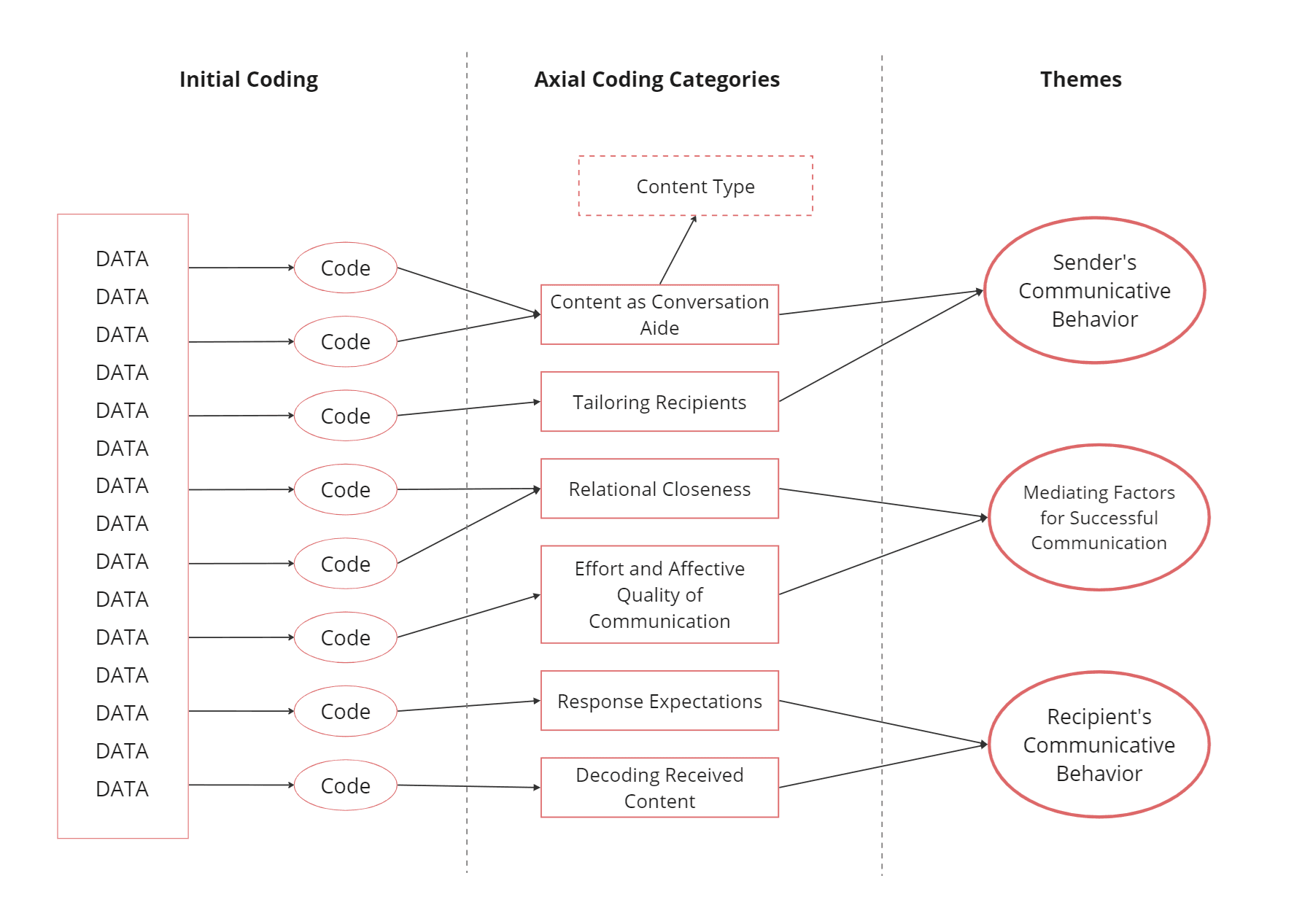
The initial pass of open coding produced 97 unique codes which were then used to create categories. The codes were further refined and redundant tags were either merged with other categories or deleted entirely, leading to a total of 50 codes after the iteration. With the new codes, a second pass of analysis was done through axial coding to arrive at key categories that could be used to find the main themes derived from the interviews, relating to user behaviors in online communication and how shared content is used and mediated in relationally close conversations. A diagram summarizing the coding process is depicted below:
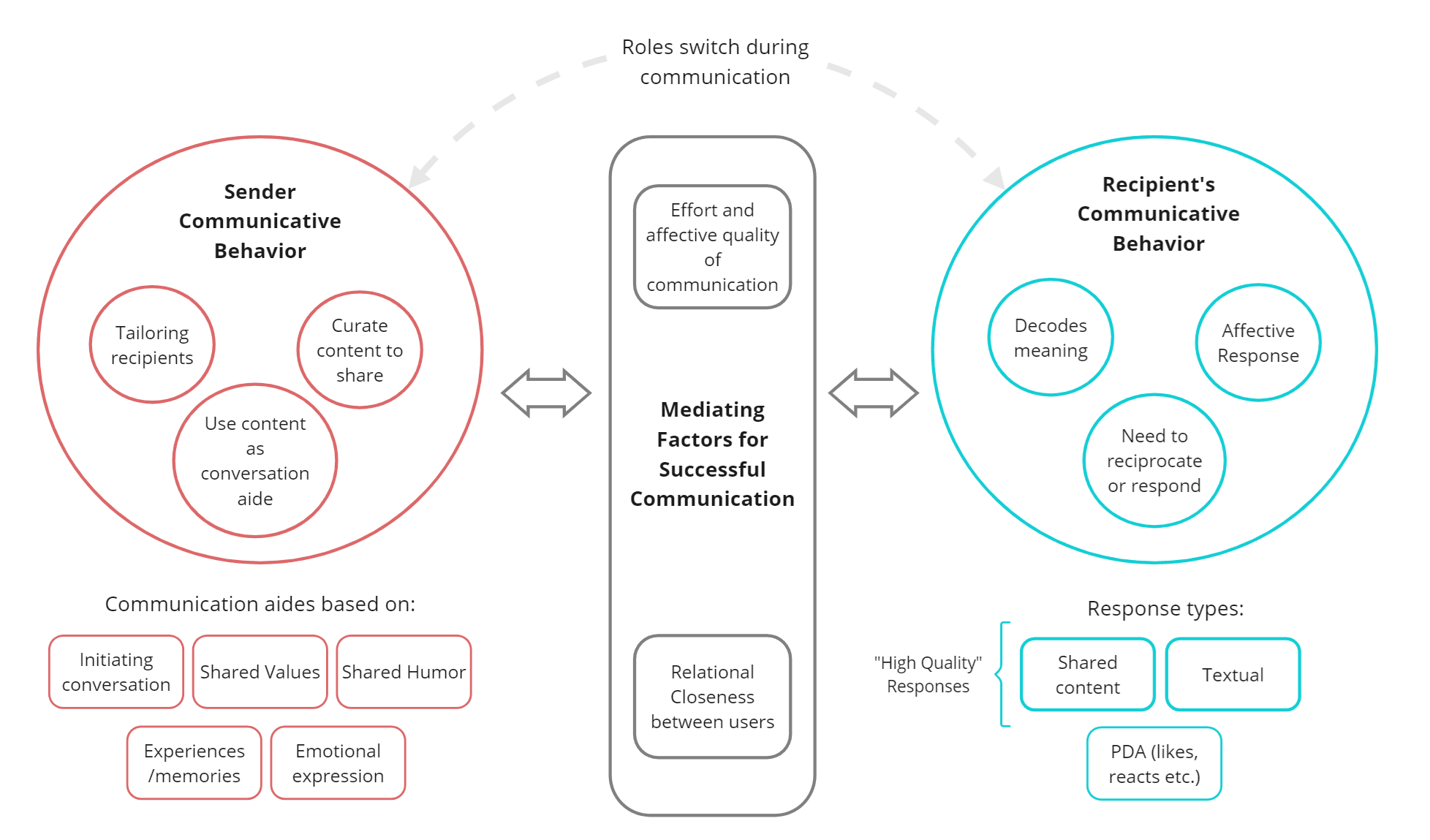
Based on the high-frequency codes and recurring themes within the content, a diagram was created depicting the relationship between sender and receiver behaviors and how relational closeness and the quality and effort involved or perceived in communication are seen as mediating factors that determine successful communication in dyadic relationships. The diagram is depicted below:
Sender’s communicative behavior
The sender referred to here is the person initiating the conversation by sending content first. The role of sender and recipient is interchangeable and both people in one-to-one communication occupy the role at different points in successful communication. The sender’s key roles include tailoring recipients that the sender commonly communicates with, curating the content that they send to people based on different factors (including relational closeness, reciprocity in the relationship, perception of shared values, humor, etc.), and using shared content as a tool to aid in conversation.
Design Opportunity: Reduce uncertainty around how shared content will be received and providing more context
Mediating factors for successful communication
These factors work both ways, between sender and recipient, in determining the overall success of communication in achieving positive affective responses and a sense of closeness or intimacy between both parties. The relational closeness and perceived effort from both parties are key aspects here. Effort in particular can refer to the ‘quality’ of the response a recipient sends back, as well as the relevance or affective/emotional response elicited in a recipient based on how the sender curates the content they send
Recipient’s communicative behavior
Recipients also play a key role in maintaining healthy communication by being able to successfully understand and decode the meaning of the content sent to them concerning their understanding of the sender and other contextual nuances that display shared values, humor, etc. The recipient experiences some emotion, ideally positive, based on the content sent to them, and feels the need to reciprocate correspond in some way. The response can take the form of high-quality responses such as textual responses or sending relevant shared content back to the sender. Lower-quality responses include PDAs such as likes and reactions which can still sustain communication but tend to not enhance the relational intimacy between both parties.
Design Opportunity: Improve expectations of reciprocity between both sender and recipient
Opportunities
A journey of the overall communication involving short-form content was made to arrive at the key factors and thought processes involved in each step of the communication. This journey serves as a framework to understand what constitutes successful communication as well as identify areas where the communication might break down. Through this journey and the findings of both the interviews and the probe activity, some design opportunities have been highlighted below:
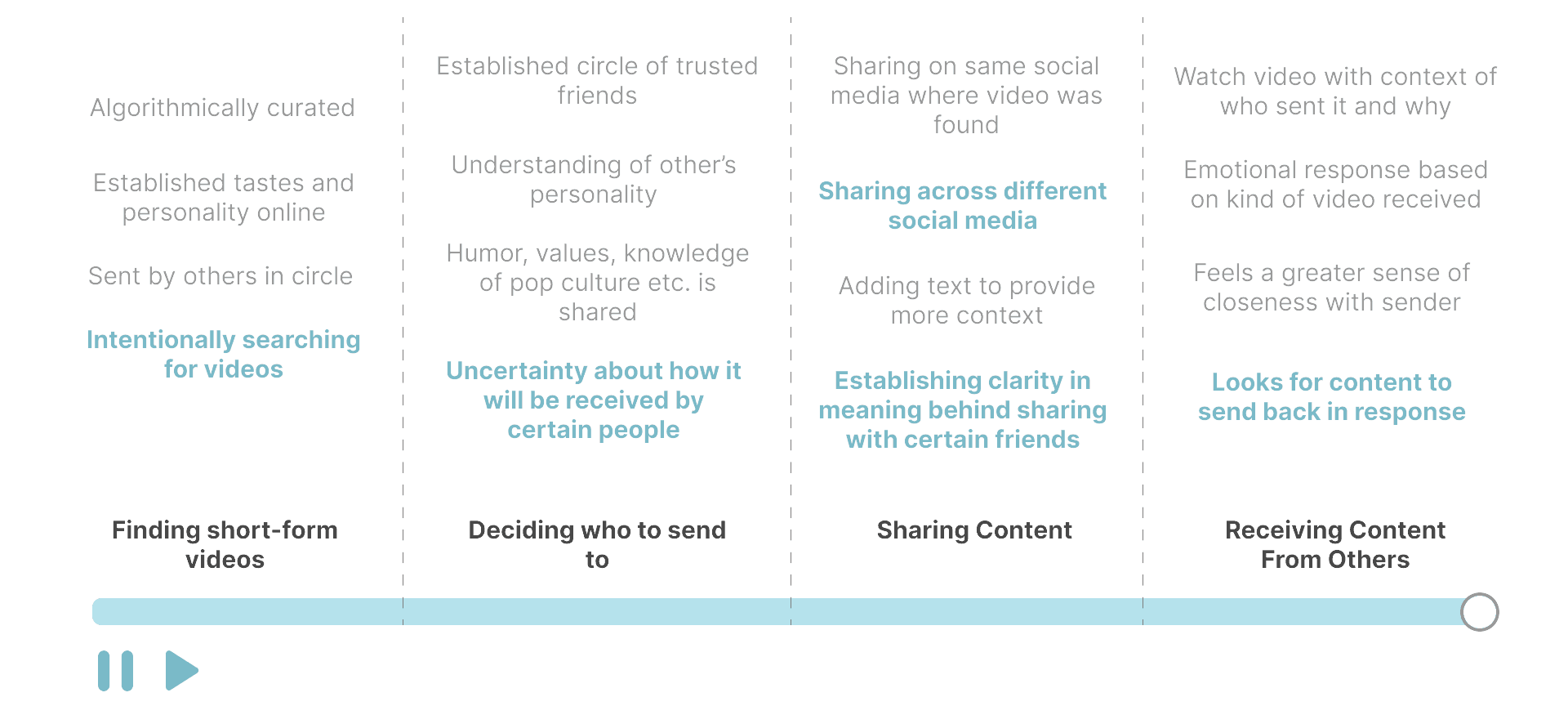
The key areas where the conversational disconnect occurs while sharing short-form videos revolve around the following phases:
1
Tailoring recipients and curating content
2
3
Using short-form videos to express vulnerable emotions or while providing care
4
Reciprocation of communication mediated by the sharing of short-form videos
Design Recommendations
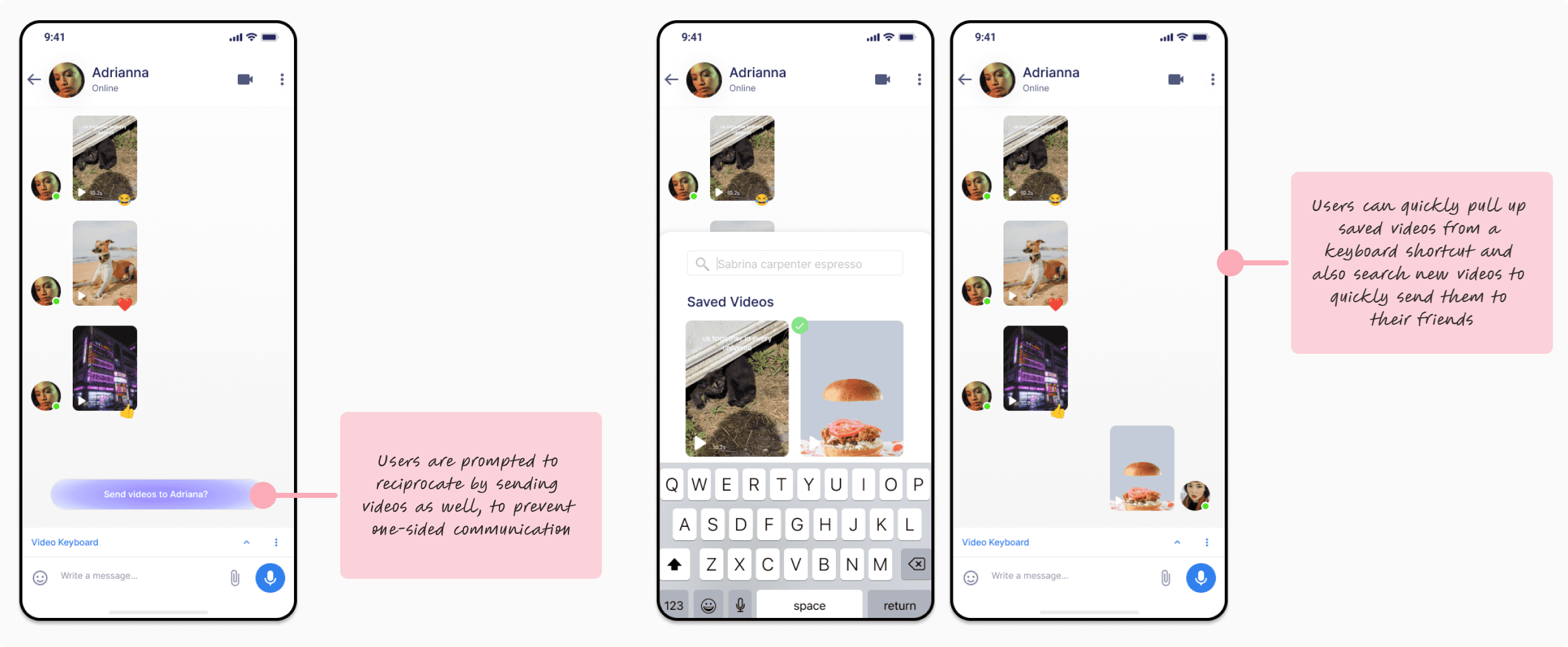
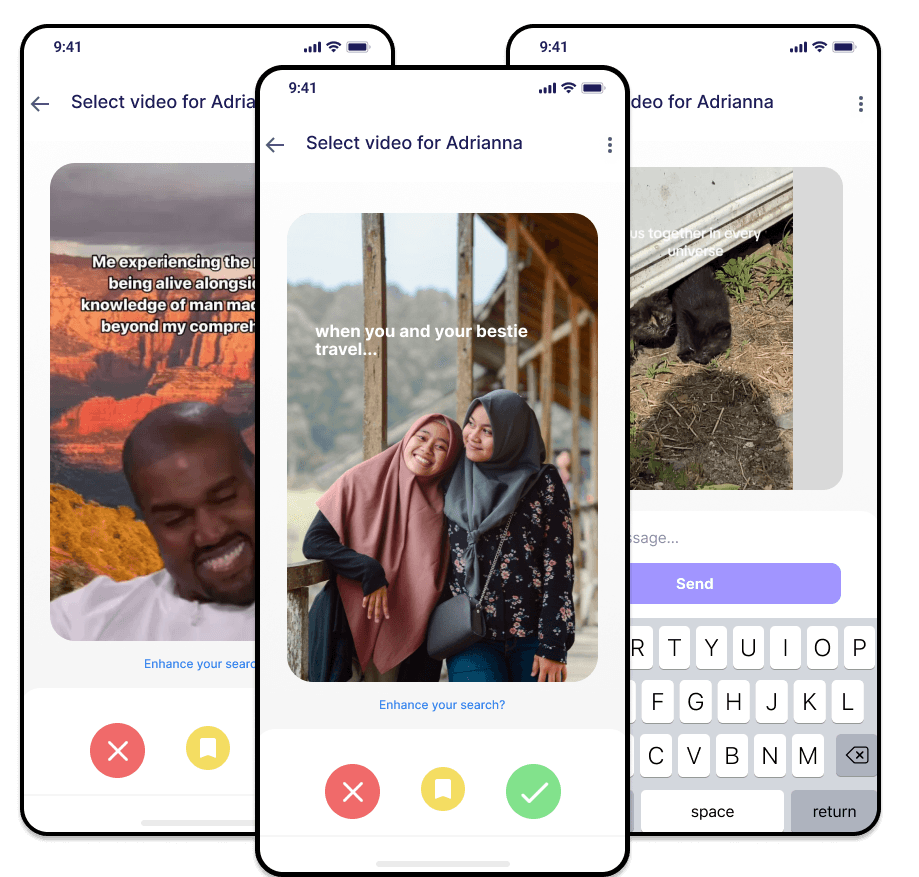
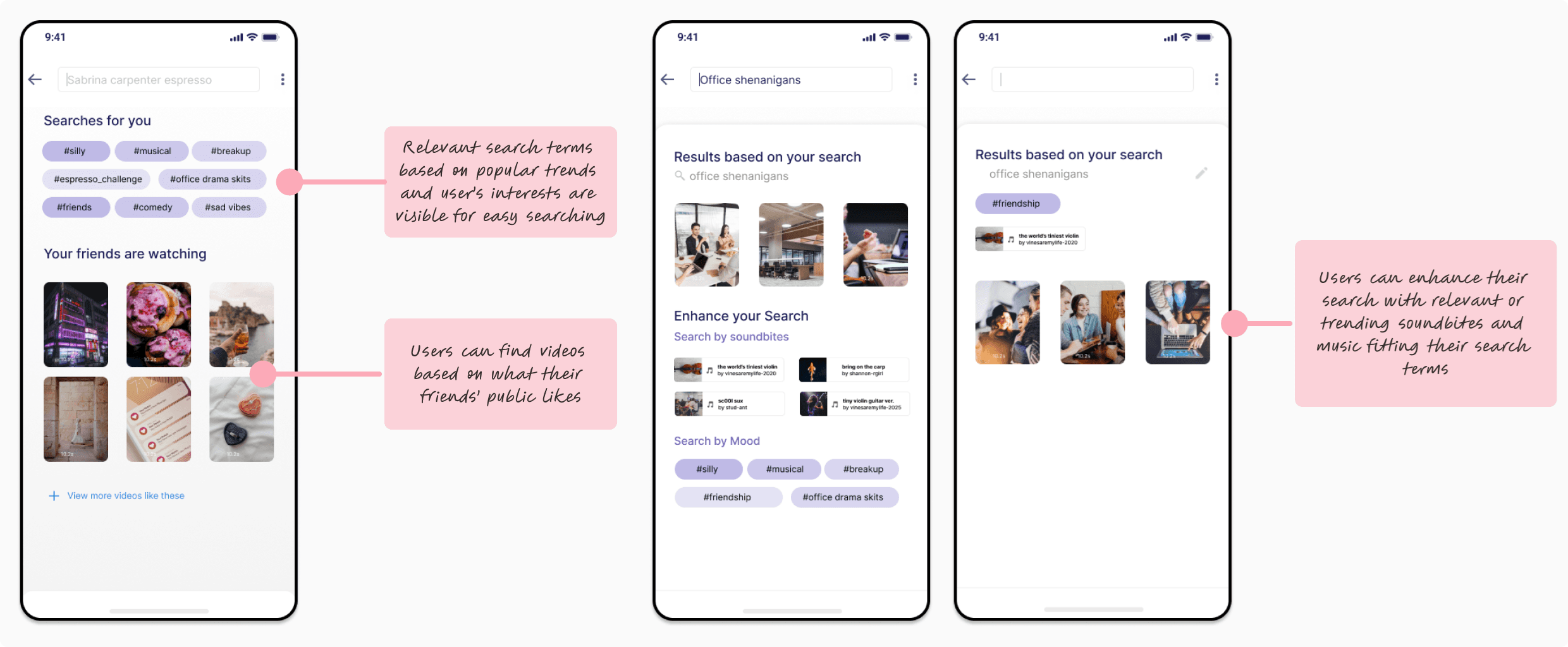
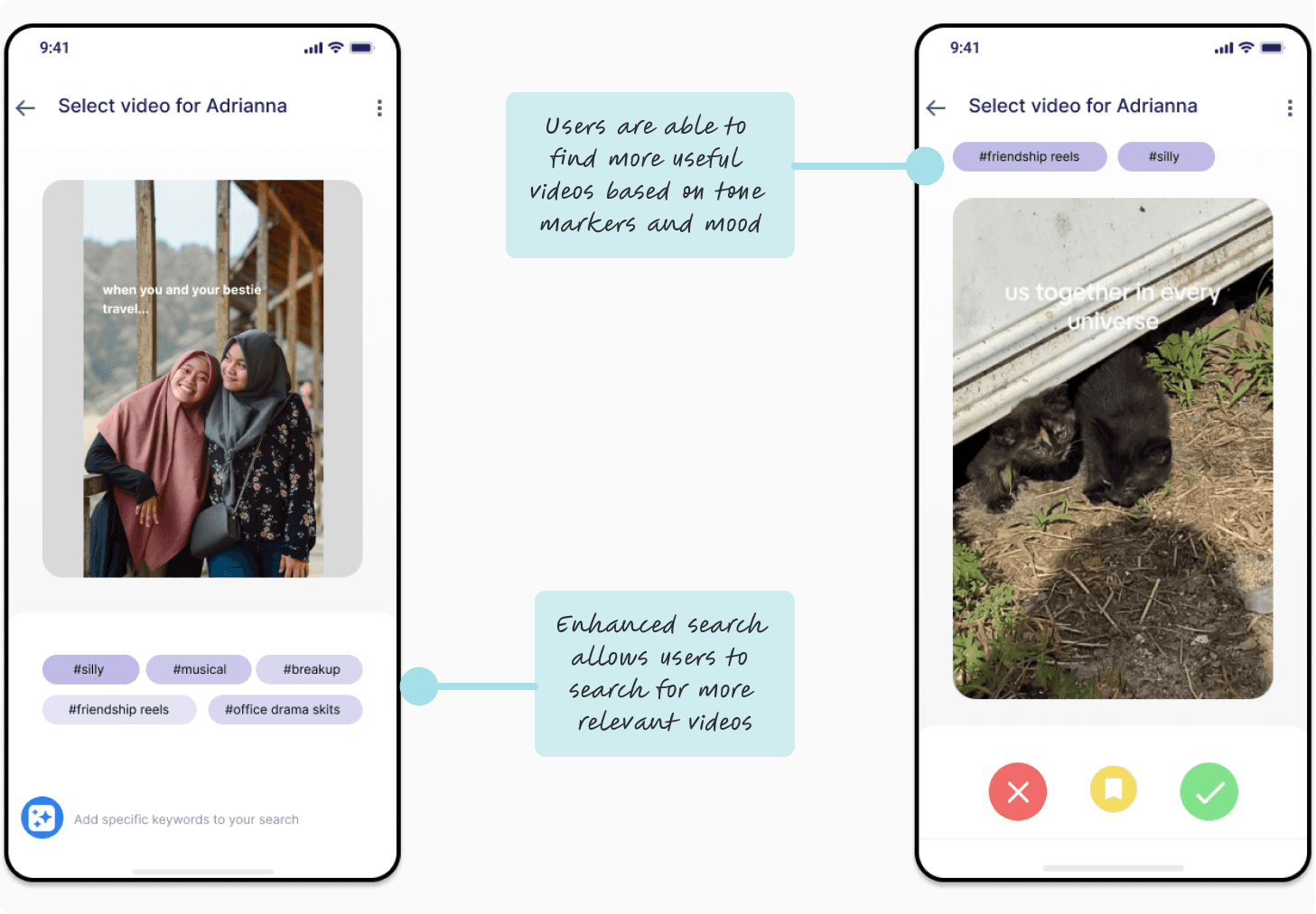
R1: Improving the relevancy of videos available to users based on conversational needR2: Increasing searchability of relevant videos for users to find
Having a more
robust search feature increase the availability of videos for users to find and this can be
done by leveraging the unique affordances provided by short-form videos in their structure.
Since these videos rely on sound/music as well
as text and video, making these elements a key focus of search functions could make them much
more accessible to users.
R3: Tailoring content available to users based on established
friend circles
R4: Enabling the context for sharing short-form videos to become
clearer to recipient
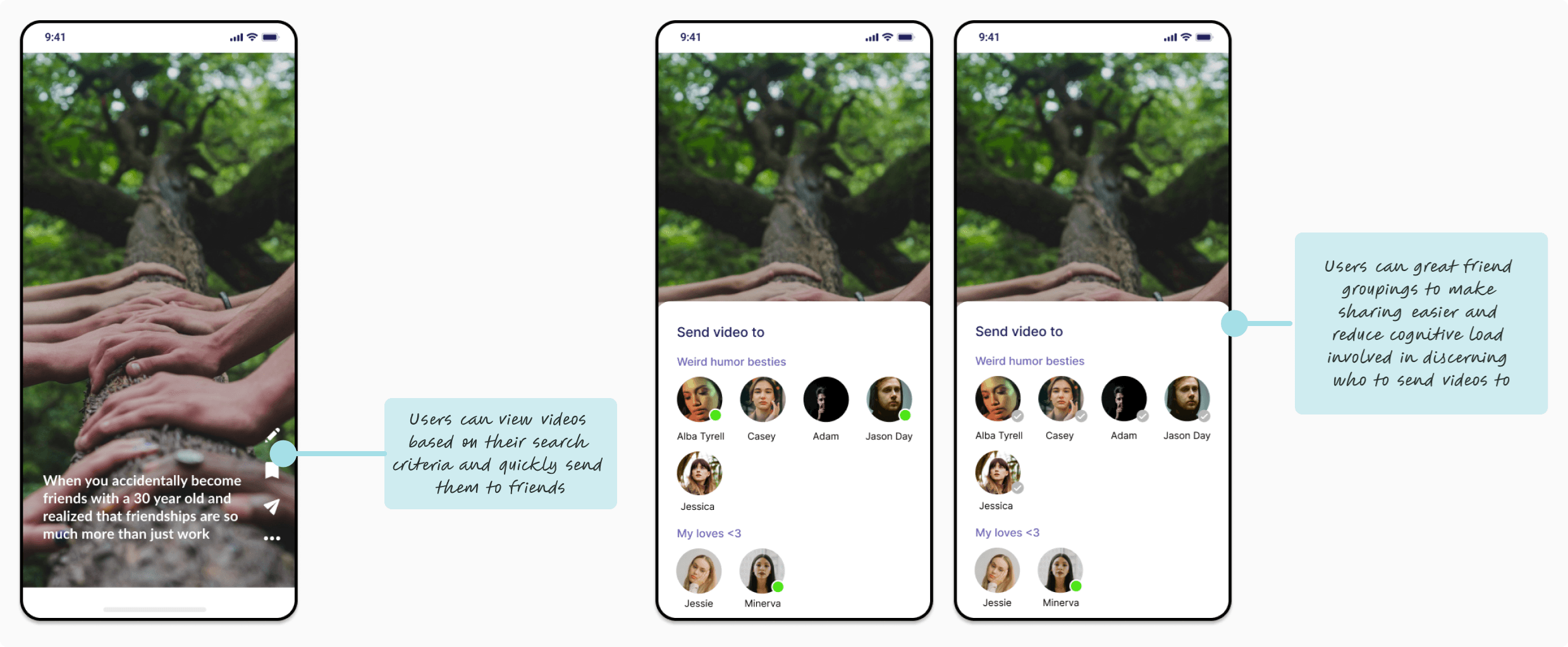
There is some
level of mental effort involved in deciding who to share certain videos with, especially when
it comes to establishing a close circle of trusted friends online. The emotional needs of
sharing videos also vary. Users often feel comfortable sharing more emotionally vulnerable
content with certain friends while with others they may only share humorous videos.
To cater to this, the process of deciding what
category of emotional need a user’s friends belong to has been automated in these designs.
Curating for certain friend groups has been explored in the realm of private messaging and
sharing by allowing users to create categories of the kinds of content they share with certain
friends.
R5: Improving user expectations around
reciprocity
R6: Making content more easily shareable, especially across
platforms
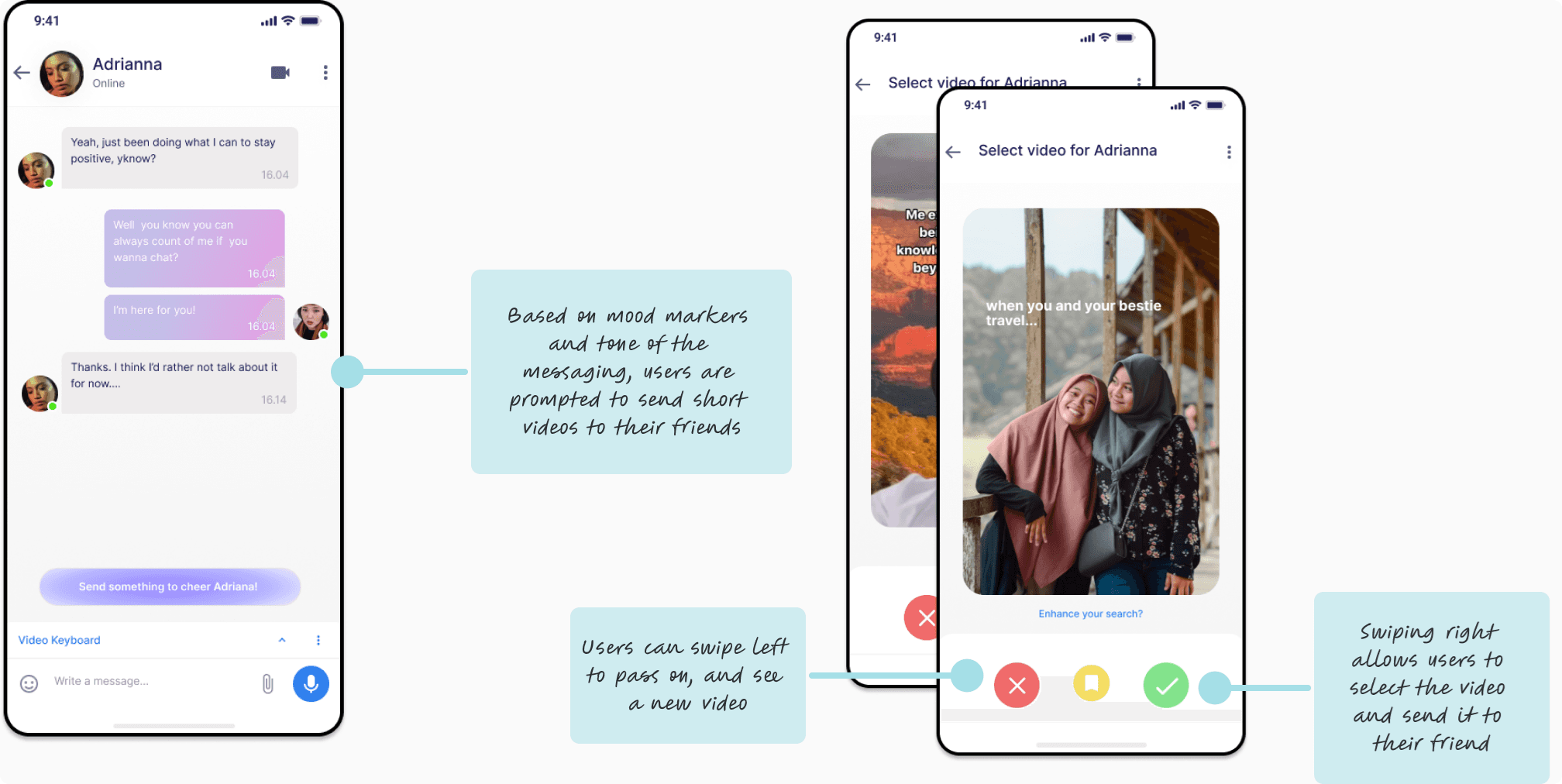
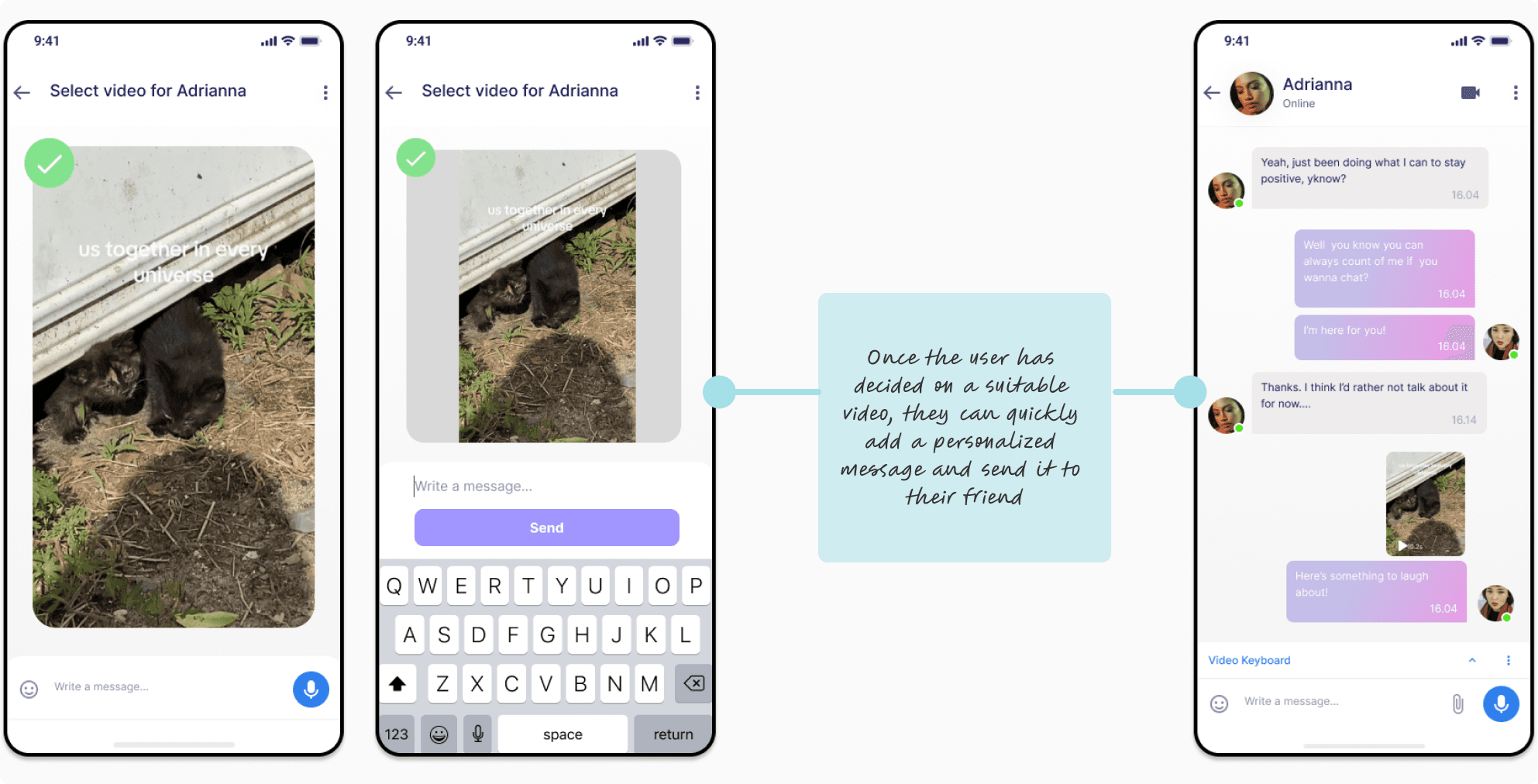
Social media users regularly share short-form videos with their friends and this can be used as an indicator to promote the use of them in regular conversation. Features such as keyboard integration, auto-suggesting relevant videos based on tone markers and keywords while texting, and other interactions within private messaging are some features that can make the use of videos in private messaging more explicit. This is one way of managing user expectations around reciprocity as well as promoting users to find relevant ways of using them in conversation more easily